Be yourself; Everyone else is already taken.
— Oscar Wilde.
This is the first post on my new blog. I’m just getting this new blog going, so stay tuned for more. Subscribe below to get notified when I post new updates.
Be yourself; Everyone else is already taken.
— Oscar Wilde.
This is the first post on my new blog. I’m just getting this new blog going, so stay tuned for more. Subscribe below to get notified when I post new updates.
My Brand.
By: Aydan Ruddick.
It can be argued that anything under the sun could add value to an employee in the workforce. The stigma around non-academic skillsets has subsided and has now rightfully been replaced by people skills and general creativity. As the modern-day workforce evolves, they need people who can evolve with it.
When it comes to applying myself and my skillsets to the workforce, I have some precious assets under my belt. To start, I’m naturally an amicable and outgoing person; throughout my life, I’ve always easily formed connections with others and been able to network when need be successful. These skills are transmissible into the constantly evolving and people-heavy work required by communications specialists.
On top of this, I’m a seasoned writer. I currently run a heavily popular Instagram blog and consistently post on it throughout the week. I also run social media for a music studio which requires me to apply a plethora of different writing styles to communicate to the audience what needs to be said effectively. I tackle things like informational posts, direct-to-mail letters, and news releases for the said studio. I dabble in creative writing quite a bit too, I’ve written multiple screenplays and plan to attend Ryerson in the future to pursue this innovative pathway fully.
I have some other miscellaneous skills: extensive knowledge of the music industry and proficiency in most modern-day programs (excel, PowerPoint, etc.). These things combined make me a proficient and creative worker, willing to take on any task full-force.
Finding your Target Audience.
By: Aydan Ruddick
Becoming a successful musician is difficult. The elusive grasp of fame doesn’t cradle everyone within its palm, yet those who experience it have one advantage over those who don’t; they know what their target audience is.
The process of finding a target audience is a relatively straightforward one. It all boils down to researching your demographics and psychographics. A demographic consists of things like your target audience’s age range, predominant gender, education level, etc. To break this down a little easier, I’ll provide an example: according to a 2018 survey done by Statista.com, 54% of people who listen to Hip Hop/R&B are between the ages of 20-24, trailed closely by 48% of people within the age range of 16-19. This means that if you’re making hip-hop music, you should tailor it towards these age demographics. Once you hit the 40-50 age range, this statistic drops down to only 15% of people, which means tailoring your target audience to this would ultimately make no sense. Demographics goes deeper than just age range; you can begin to build a demographic profile of your audiences, such as analyzing education level and ethnic/religious backgrounds.

Upon further research, we can create a thorough demographic profile for the average hip-hop listener.
While demographic profiles aren’t the end all be all for an effective marketing campaign, and sometimes a more niche audience may work in your favor. Having this information will help target your advertisements, build your brand to be what you’d like it to be, and make sure that the brand reaches the right audience.

Now, let’s look at psychographics. These are a little bit more complex than demographics; while demographics analyze the societal bracket your audience makes up, psychographics analyze your audience’s behaviors and interests. This includes things like the brands they follow, political stances, shared hobbies, interests, and more. While both of these are important, psychographics helps the most with things like music. Understanding what makes your audience *tick* as opposed to what age and income range they fall under is essential for anyone trying to make it into the entertainment industry. As we did previously, I’ll be giving you an example of a psychographic analysis on the typical hip-hop listener based on research.

When it comes to analyzing a market as ever-changing as the entertainment industry, psychographics take priority over demographics. Figuring out why and how people act the way they do and what drives them towards that is essential for genuinely connecting with your audience. Both should be considered when devising a legitimate marketing plan.

Whatever branch of art you decide to do, always remember that the “why” outweighs the “who” every time. Use these strategies to break down your target audience truly. The use of social media, accredited sites, and trend watching will help you find your community. Remember that even after all this talk about numbers, your audience is not one. Understanding your audience should be an opportunity to grow closer to them on the positive and not a chance to capitalize on the negative. Good luck to everyone out there looking for their niche, and as always, keep pushing.
The Kaotica Eyeball: Vocal Isolation Booth.
By: Aydan Ruddick.
B2C marketing is hard; it requires you to consider the psycho and demographics of your target audience and then formulate a campaign around that. While some companies tend to struggle with this, I believe Kaotica has done a great job marketing their product: “The Eyeball.”
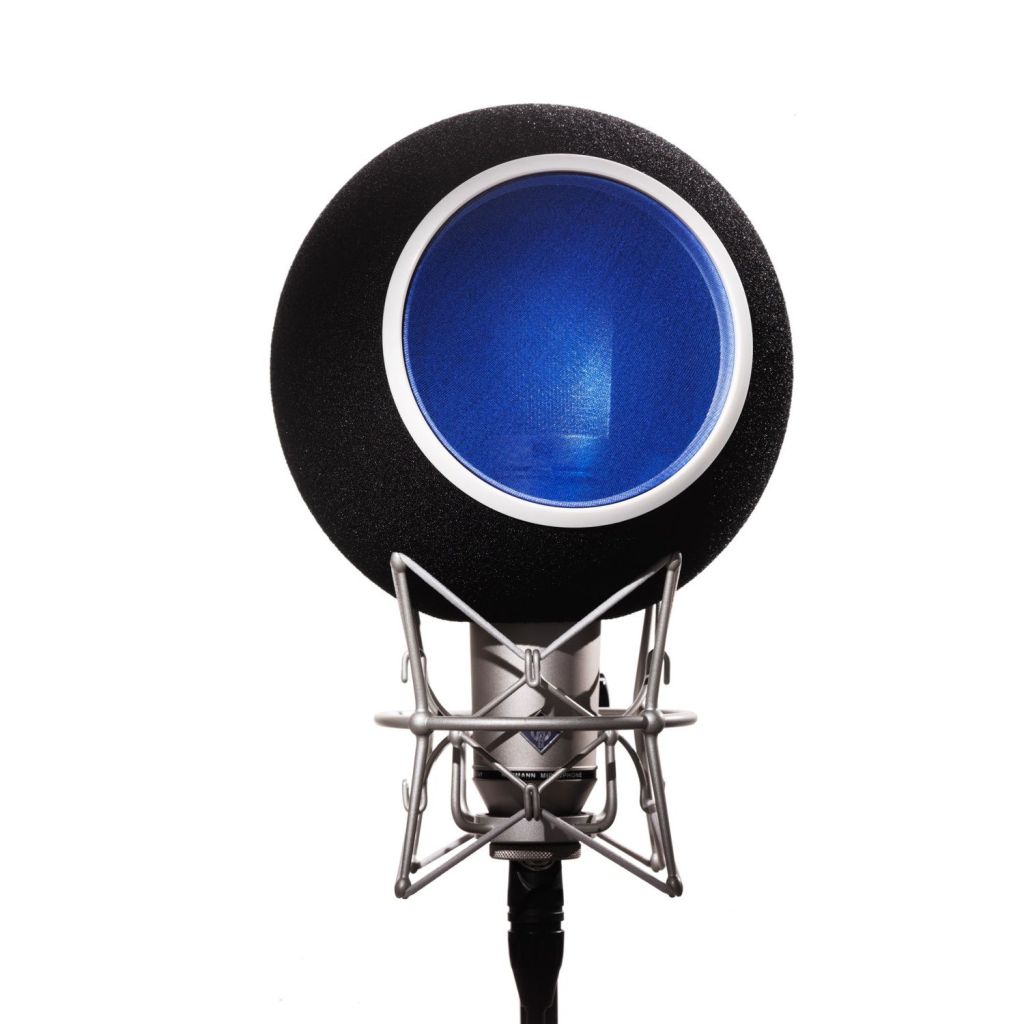
This product is intended solely for musicians; it’s lightweight, portable, and provides a robust isolated sound meant to mimic a studio. They portray this very well to their target audience. In their advertisements and website home page, they’ll typically have a musician standing in an open space and using the eyeball within that. While this looks normal for non-musicians, it’s pretty impressive to those who would be interested in the product. The concept of getting good, isolated sound quality within an ample open space is hard to do. Typically, the sound waves will reflect and refract off surfaces which affect the audio quality. Kaotica showcasing this feat done so effortlessly is a perfect representation of the promise they’re making their consumer.

They utilize social media quite well. They’ll post testimonials and photos of people using the product. This enforces credibility and gives the audience a repeated image of credible musicians utilizing the product. Portraying this will allow their target audience of musicians on a budget to see satisfied customers and get a feel for how the product will fit into their setup. They also hold events that reinforce brand credibility and establish them as a thought leader within the industry.

My only complaint with Kaotica’s socials would be the lack of theme. While they post all these testimonials and satisfied customers, many of their posts tend to be not color coordinated and seem dangerously random.

All in all, I believe the Kaotica eyeball does a great job establishing what it provides to its consumer base, reinforcing that, and ultimately creating an alluring product that speaks volumes to its target audience.
The Art of Storytelling.
By: Aydan Ruddick.
A formulaic approach can be applied to nearly every aspect of our lives; this includes storytelling. Keeping your stories clear, concise, focused, and structured can ensure a robust finished product by the time it’s completed.

As with any successful project, all must plan stories precisely with a clear end goal in mind. Think of the process your account takes, like a long scenic drive to a beautiful crystal temple. During this drive, you’ll see a lot of exciting things; you’ll see abandoned houses and strange trees, multicolored rock faces, elegant waterfalls, and strange caves. All of these things you’re seeing populate your trip, holding your attention and building the anticipation for that fantastic end goal. Once you know where your story will end, you’ll learn how to populate it with incredible things.

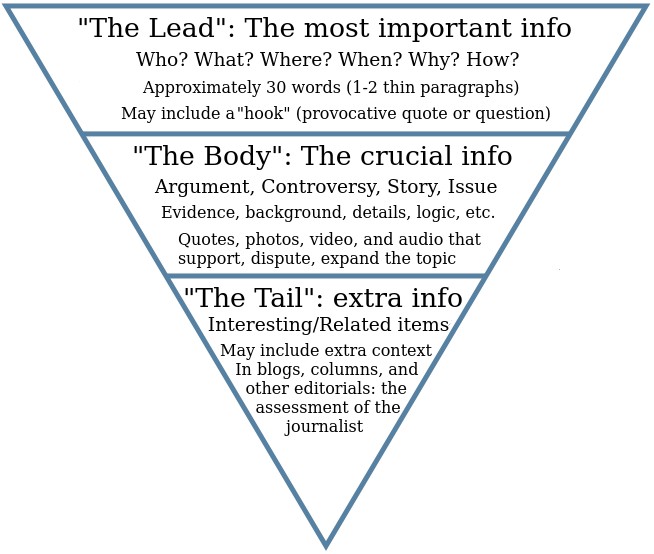
Every drive has to start somewhere, and if the beginning of that drive doesn’t intrigue you, then you’ll fall asleep on the road. This is the same for storytelling; to catch your audience’s attention, you need to start with a good “lead.” This lead is essential for holding an audience; its primary purpose is to reel them in tightly enough to build excitement towards the ending. A primary example of this would be the “inverted pyramid method,” which has you portray the most important information first to catch your audiences attention, filling the body with exciting news about your topic, and filling the end with the least polarizing information before revealing the conclusion to tie it all together. A diagram of the method will be showcased below.
Following these steps is a substantial base to have, but a few smaller-scale things are sure to build your story exponentially. The first being clarity and conciseness; adding too much “fluff” to an account can drive the audience away. The idea is to portray your points clearly and concisely to hold the reader’s attention and prevent yourself from going on miniature tangents that take away from the piece as a whole. The second is grammar and voice. Having grammatical or spelling errors can take away from the story and damage your writing credibility in the reader’s eyes. Picking your tone of voice is essential as well; you’ll always want to write in the active voice as opposed to passive voice. Active voice gives the reader the impression that you’re acting on the subject instead of having worked on it. You can achieve this by using action verbs such as “are,” and it will ultimately give your reader a more enjoyable experience.

By utilizing all these tips, you can rest assured that whatever you decide to fill your long scenic drive with will be interesting and hold your reader’s attention. Storytelling is a recipe; you just get to pick the ingredients.
This is an example post, originally published as part of Blogging University. Enroll in one of our ten programs, and start your blog right.
You’re going to publish a post today. Don’t worry about how your blog looks. Don’t worry if you haven’t given it a name yet, or you’re feeling overwhelmed. Just click the “New Post” button, and tell us why you’re here.
Why do this?
The post can be short or long, a personal intro to your life or a bloggy mission statement, a manifesto for the future or a simple outline of your the types of things you hope to publish.
To help you get started, here are a few questions:
You’re not locked into any of this; one of the wonderful things about blogs is how they constantly evolve as we learn, grow, and interact with one another — but it’s good to know where and why you started, and articulating your goals may just give you a few other post ideas.
Can’t think how to get started? Just write the first thing that pops into your head. Anne Lamott, author of a book on writing we love, says that you need to give yourself permission to write a “crappy first draft”. Anne makes a great point — just start writing, and worry about editing it later.
When you’re ready to publish, give your post three to five tags that describe your blog’s focus — writing, photography, fiction, parenting, food, cars, movies, sports, whatever. These tags will help others who care about your topics find you in the Reader. Make sure one of the tags is “zerotohero,” so other new bloggers can find you, too.

 Aydans house